Same clock for everyone
Every robot runs the same course under the same rules, timed and scored automatically and checked by officials.
Official rulebook // Adaptive Standard // Edition 1.9
Everything a team needs to know before Tel Aviv, in plain language: how every run is timed and scored, who wins each arena, what ends a run, and how declared teleoperation adds time to your result.
Every run starts the same way
Five lights on, all lights out: the official clock starts. Your control mode is already declared.
Go01 // The rules in one minute
Every robot runs the same course under the same rules, timed and scored automatically and checked by officials.
Each arena takes up to 12 teams on May 18. The top 4 to 6 reach the Grand Final on May 19.
Under the Adaptive Standard most errors add a time penalty and precision earns a time bonus, so the run carries on.
Declare it and you can use it. Each use of active human assistance adds +60 seconds to your result.
Up to five credentialed crew inside the live arena. Each extra person adds +10 seconds to that run.
Officials can pause or stop any run for an uncontained hazard, loss of control, fire risk or a spectator-safety risk.
02 // How every run works
Mass, battery, radio, emergency stop and containment are checked. Only cleared robots reach the grid.
Before each run you declare your control mode: fully autonomous, or declared teleoperation / hybrid.
Lights out. The official clock runs while sensors log bonuses, penalties and any human assistance.
Automated timing and scoring are audited by the officials. Written protests close 60 minutes after the finals.
Net time, points or match result decides the ranking. Top places advance, then the podium.
03 // How results are calculated
In time-based arenas the clock decides. Penalties add seconds, precision bonuses take seconds off, and every use of declared teleoperation adds +60 seconds. The lowest net time wins.
Points arenas (A-08 The Waiter Run, A-09 The Pinbreaker Strike, A-10 The Burst Circuit): the highest score wins.
Race arena (A-03 The Kinetic Overdrive): the Grand Final is decided by finishing order, with time penalties applied.
Chess arena (A-06 The Grandmaster Gambit): match points decide; teleoperation costs 60 seconds from the robot's own clock.
Example run · time-based arena
Illustrative numbers. Each arena's own bonuses and penalties are listed below.
04 // Penalty, stop or violation?
Most mistakes under the Adaptive Standard: a dropped item, a collision, a boundary breach, an extra crew member. Seconds are added, the robot keeps going.
Some arenas end a run on a specific failure, and officials stop any run that becomes unsafe.
These are not penalties you can choose to take. The stewards rule on them using the telemetry and video record.
05 // Teleoperation
The inaugural Games welcome teams whose autonomy is still growing. You may use teleoperation or hybrid control — as long as you declare it before the run. It is never hidden from the result: each active human intervention adds a fixed fine to your timeline.
Your control mode is declared at the start line: fully autonomous, or declared teleoperation / hybrid.
Each active human intervention adds +60 seconds to the run time. In A-06 chess, 60 seconds come off that robot's own clock instead.
Read-only telemetry — watching your robot's data — is not teleoperation and costs nothing.
Undisclosed human input is a rules violation, ruled on by the stewards from the telemetry record.
06 // Who wins
Each arena is its own world title. Enter one arena or all ten — every arena pays its own podium. There is no overall or aggregate cash prize.
1st place
US$100,000
2nd place
US$10,000
3rd place
US$2,500
07 // Arena by arena
The task, the format, who wins, every bonus and penalty, what ends a run and what you need to bring — for each arena.
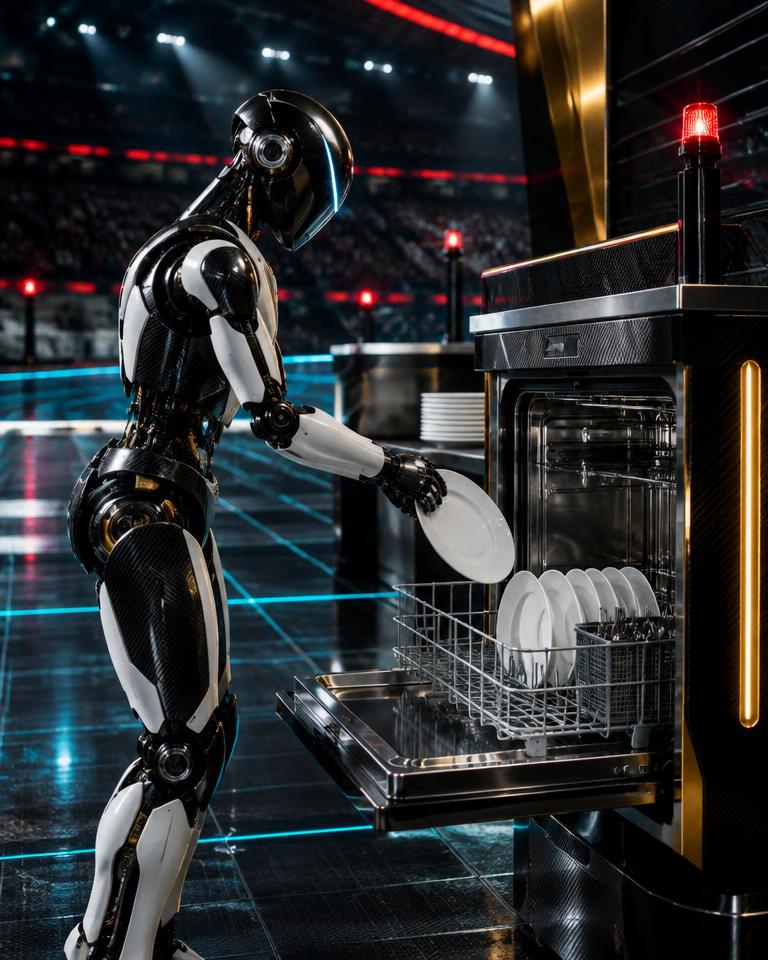
Load ten oily plates, glasses and cutlery into a dishwasher in eight minutes.
 Winner · US$100,000
The task
Fine-grain tactile loading of ten fragile, oil-slicked items — 4 porcelain plates, 2 long-stem crystal glasses and 4 metal cutlery pieces — from a chaotic bussing cart into a commercial dishwasher.
The arena
Commercial multi-rack under-counter dishwasher with lower and upper racks extended, a stainless bussing cart of 10 vegetable-oil-coated items and acoustic floor sensors around the cell.
Format
May 18 · Semi-final
Load all 10 items within an 8-minute maximum ceiling. Top 6 advance.
May 19 · Grand Final
Full load against an accelerated clock under variable soapy surface spray. Lowest net time wins.
Who wins
Lowest net time
Lowest net time wins. Podium: 1st US$100,000 · 2nd US$10,000 · 3rd US$2,500.
Scoring, bonuses and penalties
What ends a run
Adaptive — no automatic stop in the heats
None in the heats — under the Adaptive Standard a cracked plate costs +5s, not the run. A red flag is reserved for a catastrophic, uncontained arena hazard.
Teleoperation
+60s penalty for any active teleoperation assistance. Declare it before the run; hidden input is a rules violation.
What you need
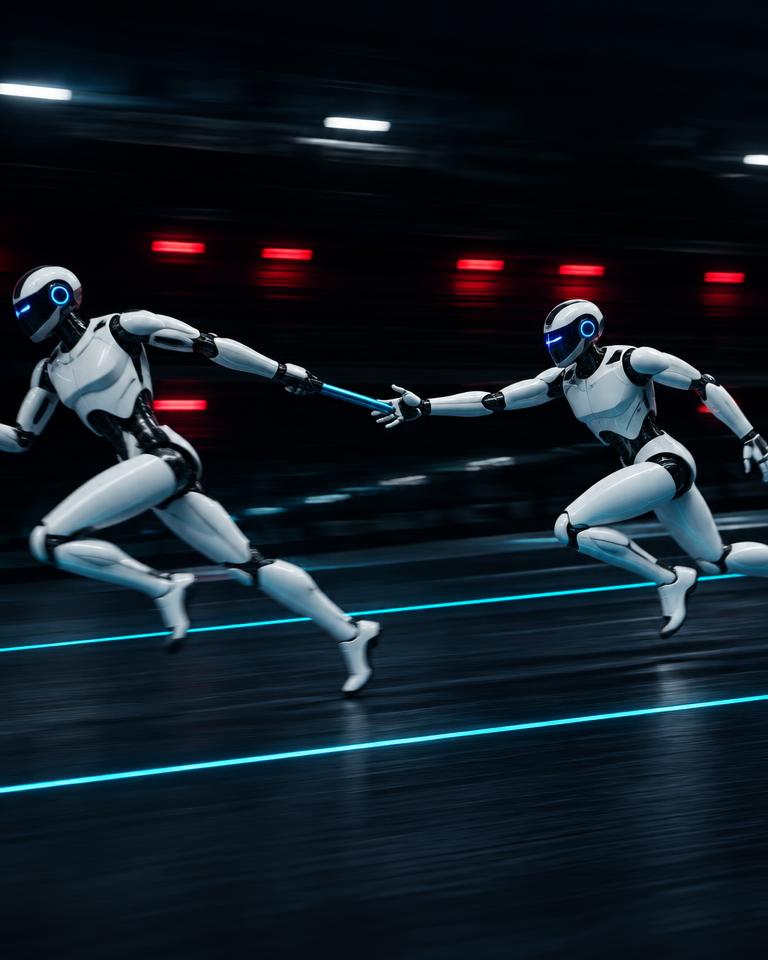
Pass a baton between two moving robots over a 20-metre sprint.
 Winner · US$100,000
The task
A 20m high-speed indoor sprint in two 10m sectors. Sprinter Alpha launches with an anodized gold baton and hands it to Sprinter Beta inside a 6m dynamic exchange zone (meters 7–13) — with both machines in forward motion.
The arena
20m indoor straightaway split into two 10m running sectors, a laser-gated 6m exchange zone (m 7.00–13.00), 2.5m lanes and electronic timing gates.
Format
May 18 · Semi-final
Individual timed sprints with the moving handover. Top 4 advance.
May 19 · Grand Final
Head-to-head dual-lane sprint duel with a continuous 35 km/h lateral crosswind fan buffeting the exchange zone.
Who wins
Lowest net sprint time
Lowest net time wins. Podium: 1st US$100,000 · 2nd US$10,000 · 3rd US$2,500.
Scoring, bonuses and penalties
What ends a run
Adaptive — no automatic stop in the heats
None in the heats — a dropped baton is a +5s penalty and the sprint stays alive. Red flags are reserved for uncontained hazards.
Teleoperation
+60s penalty for any active teleoperation assistance. Declare it before the run; hidden input is a rules violation.
What you need
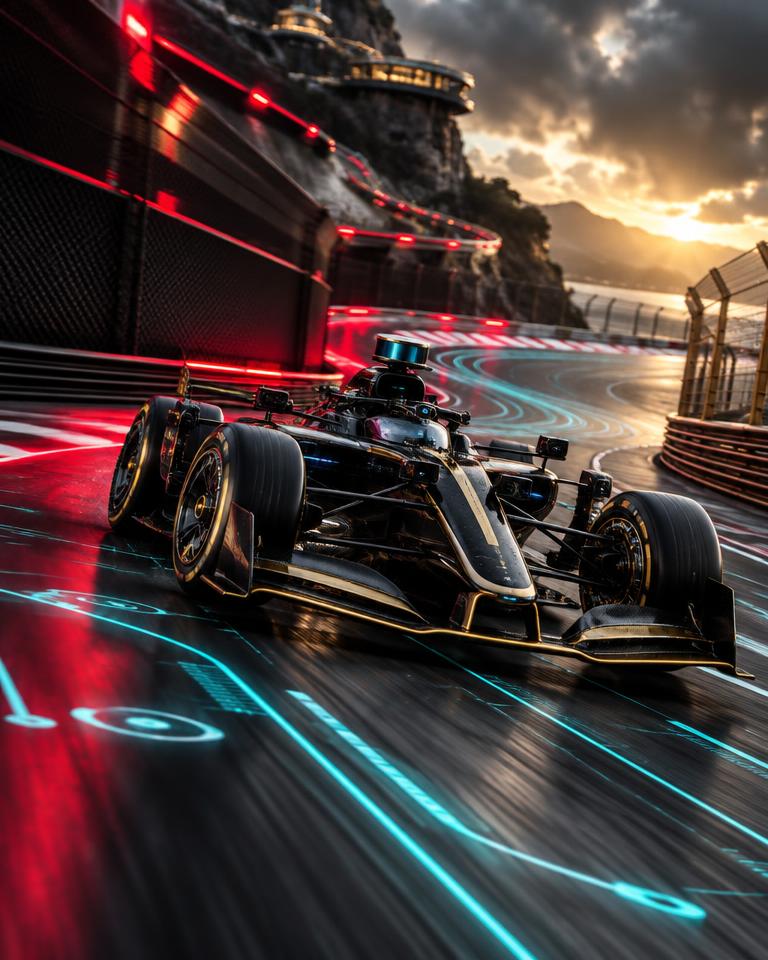
Race autonomous vehicles wheel to wheel on a closed-loop circuit.
 Winner · US$100,000
The task
An autonomous crazy-car grand prix on an 80m indoor closed-loop asphalt circuit with high-friction stretches and a narrow chicane lined with illuminated, energy-absorbing barriers. 1:4 scale platforms or electric karts capped at 15kW.
The arena
80m indoor closed-loop asphalt circuit (4.0m wide) with dry high-friction asphalt, a neon-lined transition chicane, energy-absorbing barriers and pneumatic pop-up ramps.
Format
May 18 · Semi-final
The Flying Lap: one warm-up lap, then a single official flying lap against the clock. Top 6 advance.
May 19 · Grand Final
Six-car simultaneous grid start for a 5-lap sprint race with pop-up obstacles deploying at randomized intervals.
Who wins
Finishing order + penalties
First across the line wins, after penalties. Podium: 1st US$100,000 · 2nd US$10,000 · 3rd US$2,500.
Scoring, bonuses and penalties
What ends a run
Red flag — the run ends
An uncontrolled boundary impact registering above 4G deceleration, or an uncontained electrical fire hazard.
Teleoperation
+60s penalty for any active teleoperation assistance. Declare it before the run; hidden input is a rules violation.
What you need
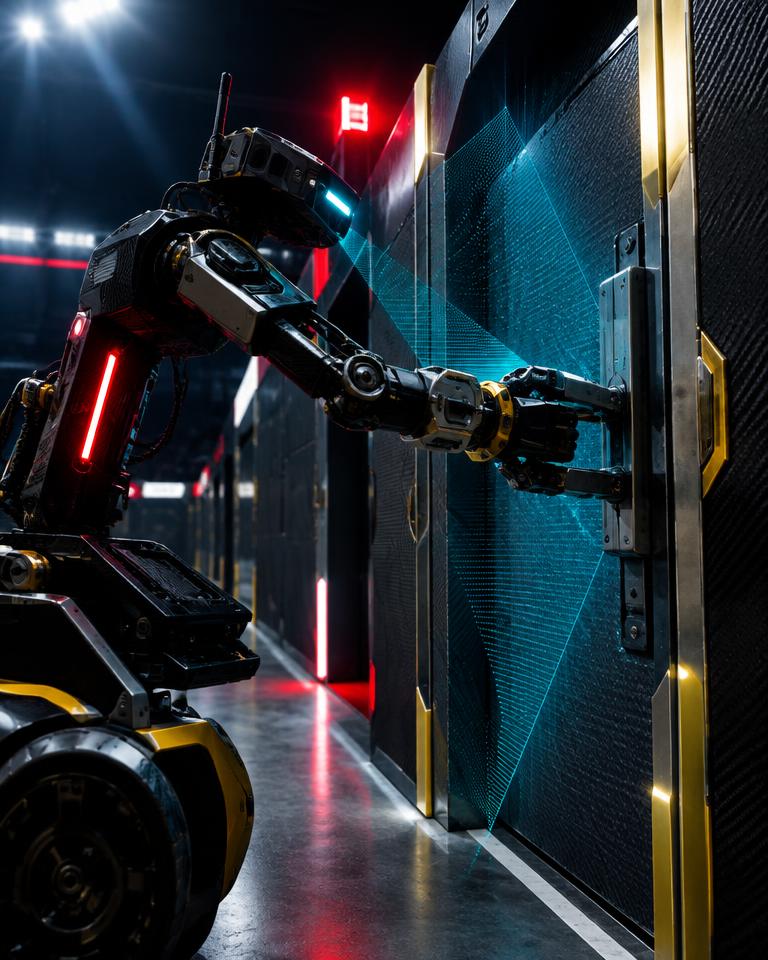
Open three unfamiliar doors and cross a sealed corridor.
 Winner · US$100,000
The task
A 15m sealed corridor gated by three full-height doors: a hydraulic commercial-glass door with 45N push-bar resistance, an armored steel deadbolt door with a 90-degree rotary handle and unmapped upper slide-bolt, and a 60kg track-mounted sliding panel with a recessed finger pocket.
The arena
15m sealed tunnel partitioned by three full-height (2.1m) doors — hydraulic glass, armored deadbolt, 60kg slider — with strain gauges on every handle and an exit boundary optical beam.
Format
May 18 · Semi-final
Breach and traverse all three doors within a 6-minute ceiling. Top 6 fastest machines advance.
May 19 · Grand Final
Consecutive rapid breach through all three doors under live randomized latch tension and an unmapped secondary resistance.
Who wins
Lowest net breach time
Lowest net time wins. Podium: 1st US$100,000 · 2nd US$10,000 · 3rd US$2,500.
Scoring, bonuses and penalties
What ends a run
Adaptive — no automatic stop in the heats
None in the heats — cracked glass and damaged latches cost +10s while the breach continues. Red flags are reserved for uncontained hazards.
Teleoperation
+60s penalty for any active teleoperation assistance. Declare it before the run; hidden input is a rules violation.
What you need
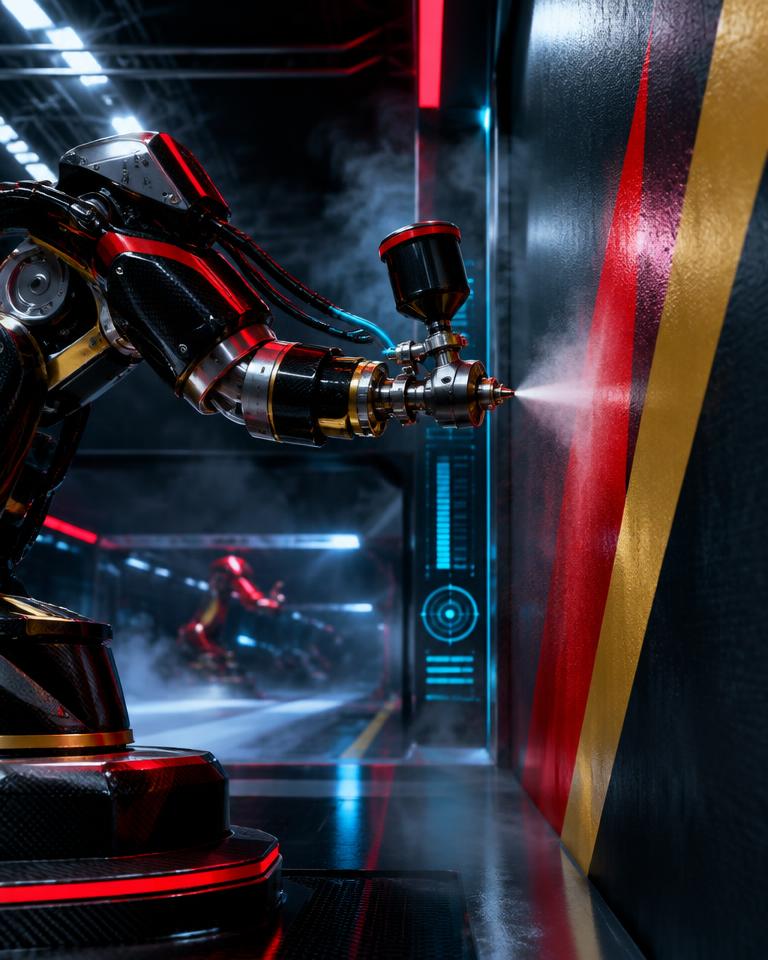
Paint a geometric wall precisely without touching the glass or fixtures.
 Winner · US$100,000
The task
Paint a 2.0m × 2.5m architectural drywall carrying an intricate colorful geometric mandala layout, one de-energized sealed socket mock-up, a de-energized toggle-switch mock-up and a 50×50cm frameless glass pane — with open tooling: airless spray, 9-inch rollers or 2-inch angle brushes.
The arena
2.0m × 2.5m matte-white pre-primed drywall with an outlined mandala, de-energized sealed socket and switch mock-ups, a flush 50×50cm frameless glass pane and an overhead spectrophotometer. No live electrical conductors are present in the competition cell.
Format
May 18 · Semi-final
Clean coating of the central base pattern. Top 6 fastest machines with uniform layer distribution advance.
May 19 · Grand Final
100% coverage of the full intricate mandala, including micro-edge cutting around the socket, switch and glass.
Who wins
Net time with artisan bonus
Lowest net time wins. Podium: 1st US$100,000 · 2nd US$10,000 · 3rd US$2,500.
Scoring, bonuses and penalties
What ends a run
Adaptive — no automatic stop in the heats
None in the heats — a speck on the glass costs +10s, not the run. Red flags are reserved for uncontained hazards.
Teleoperation
+60s penalty for any active teleoperation assistance. Declare it before the run; hidden input is a rules violation.
What you need
Two robots face off over a real chessboard — move the pieces, hit the clock, checkmate.
 Winner · US$100,000
The task
Robot versus robot over a real tournament chessboard. Each machine reads the position with its own cameras, picks up weighted Staunton pieces, captures, castles, promotes — and hits its own clock. No screens, no digital board: every move is a physical act, and every second on the clock is real.
The arena
Centre-stage chess table between two facing robot cells, a regulation tournament board (55mm squares), weighted Staunton pieces (95mm king), a physical digital chess clock and overhead cameras driving the giant live board on the jumbotrons.
Format
May 18 · Semi-final
Up to 12 robots play three Swiss-system rapid rounds (10 min + 5 s per move). Win 1 · draw ½ · loss 0. Top 6 on points advance.
May 19 · Grand Final
The top 6 meet in a blitz round-robin (3 min + 2 s) on the centre-stage board. A tie for first is settled by an Armageddon decider — white must win, a draw crowns black.
Who wins
Match points + tiebreaks
Most match points wins, then tiebreaks. Podium: 1st US$100,000 · 2nd US$10,000 · 3rd US$2,500.
Scoring, bonuses and penalties
What ends a run
Clock-time penalties — the game goes on
None for a fumble — a toppled piece costs clock time, not the game. Flag fall loses on time. Red flags are reserved for uncontained hazards or a robot reaching into the opponent's cell.
Teleoperation
Declared teleoperation: 60 seconds deducted from that robot's own clock each time it is used. Declare it before the run; hidden input is a rules violation.
What you need
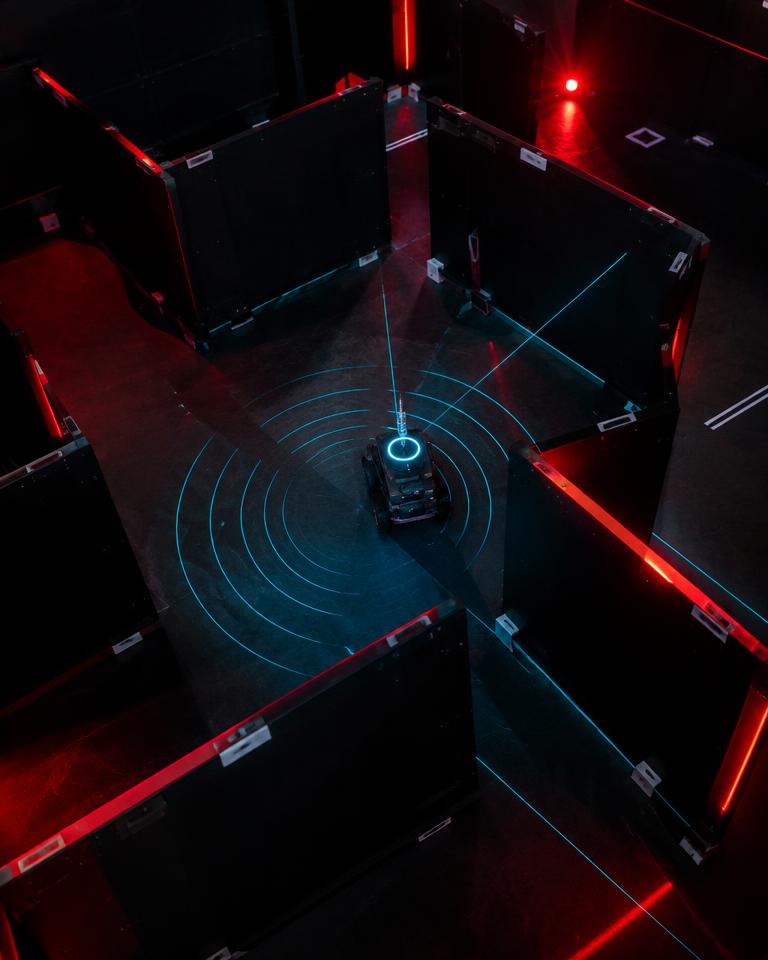
Map an unseen maze and find the exit as the walls change.
 Winner · US$100,000
The task
A 100m² enclosed maze built from motorized modular partitions. The layout is scrambled 60 seconds before launch, and once the robot is inside, selected corridors shift to create sudden dead-ends under strobe interference.
The arena
100m² enclosed sector (10m × 10m) of 1.8m modular partitions on motorized ceiling tracks, rubber traction ramps, cobblestone pavers, low foam baffles, strobe lighting and an optical IR beacon exit.
Format
May 18 · Semi-final
The static layout is randomized 60 seconds before launch; navigate to the IR beacon within 3 minutes. Top 6 advance.
May 19 · Grand Final
Live dynamic rerouting: motorized partitions shift mid-run to close the primary corridor, forcing autonomous retreat and recalculation under a 2.5-minute clock.
Who wins
Lowest escape time
Lowest net time wins. Podium: 1st US$100,000 · 2nd US$10,000 · 3rd US$2,500.
Scoring, bonuses and penalties
What ends a run
Red flag — the run ends
A continuous stall beyond 45 seconds in a dead-end without attempting recovery, or structural collapse of a partition panel.
Teleoperation
+60s penalty for any active teleoperation assistance. Declare it before the run; hidden input is a rules violation.
What you need
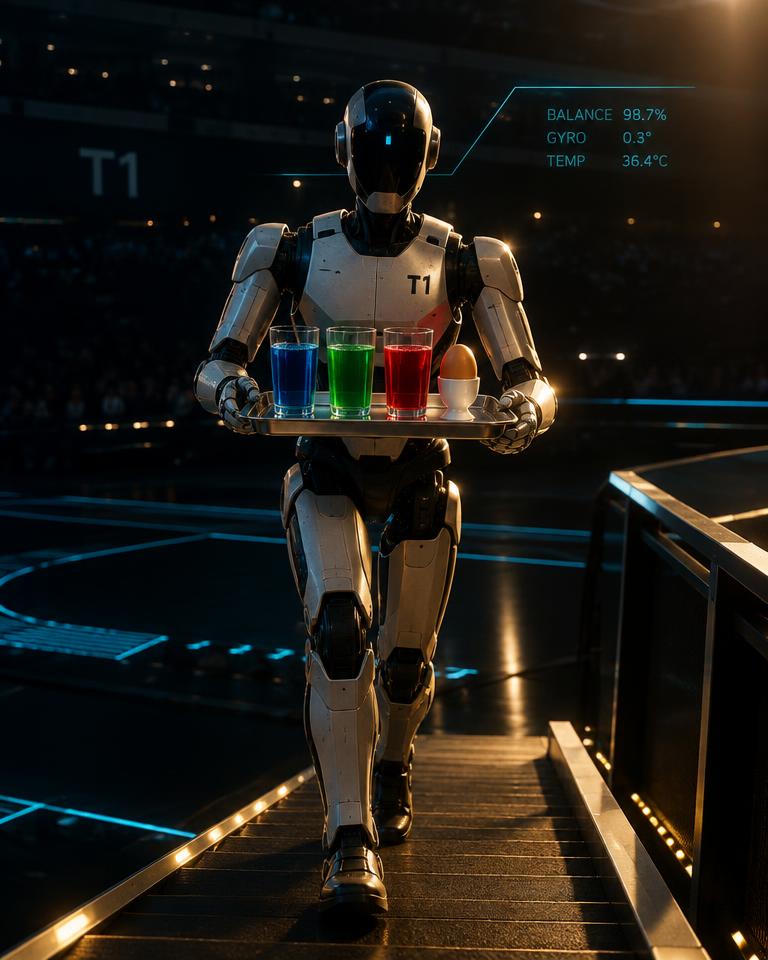
Carry a tray of water and an egg across ramps without spilling.
 Winner · US$100,000
The task
The classic catering nightmare: carry an aluminum tray holding 3 brim-full cups of fluorescent blue water (300ml each) and one raw egg in a 5mm shallow cup across a 12m course — 4m of flat track, then a 15° ramp up and down.
The arena
12m course: 4m flat track plus a 15° inclined/declined bridge ramp, a 15cm curb step in the final, arena subwoofer floor rumble and a precision digital scale at the finish line.
Format
May 18 · Semi-final
Negotiate the flat track and the ramp within a 90-second window. Top 6 advance.
May 19 · Grand Final
Full course including the added 15cm urban curb step while subwoofers emit low-frequency floor vibrations.
Who wins
Speed + water retained
Highest score wins. Podium: 1st US$100,000 · 2nd US$10,000 · 3rd US$2,500.
Scoring, bonuses and penalties
What ends a run
Red flag — the run ends
The egg rolls off the tray and cracks on the floor, or a total drop of the service tray.
Teleoperation
+60s penalty for any active teleoperation assistance. Declare it before the run; hidden input is a rules violation.
What you need
Roll a heavy bowling ball toward ten pins under spotlights.
 Winner · US$100,000
The task
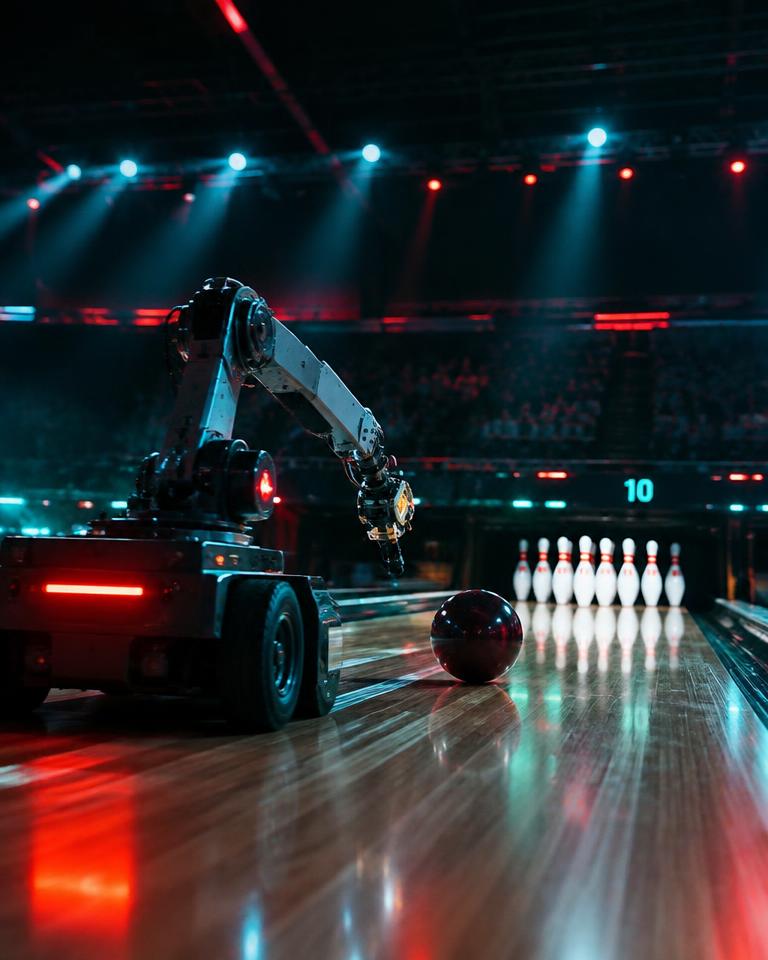
A regulation 15m USBC-grade oiled hardwood bowling lane with 10 solid maple tournament pins. The machine grasps a slick 14 lb (6.35kg) smooth urethane ball with no finger holes, advances to the foul line and releases a fluid pendulum swing.
The arena
15m regulation oiled hardwood lane (1.05m wide) with side gutters, 10 maple tournament pins, a foul-line sensor and arena radar speed guns.
Format
May 18 · Semi-final
Two frames (up to four ball deliveries). Top 6 cumulative pinfall totals advance.
May 19 · Grand Final
Three full frames under focused theatrical spotlights and amplified crowd audio.
Who wins
Pinfall + speed bonus
Highest score wins. Podium: 1st US$100,000 · 2nd US$10,000 · 3rd US$2,500.
Scoring, bonuses and penalties
What ends a run
Frame void — that delivery scores nothing
The chassis crosses the foul line during release, or the ball is lofted more than 1.0m into the air — the frame is voided.
Teleoperation
+60s penalty for any active teleoperation assistance. Declare it before the run; hidden input is a rules violation.
What you need
Strike moving balloons on a rotating carousel in sixty seconds.
 Winner · US$100,000
The task
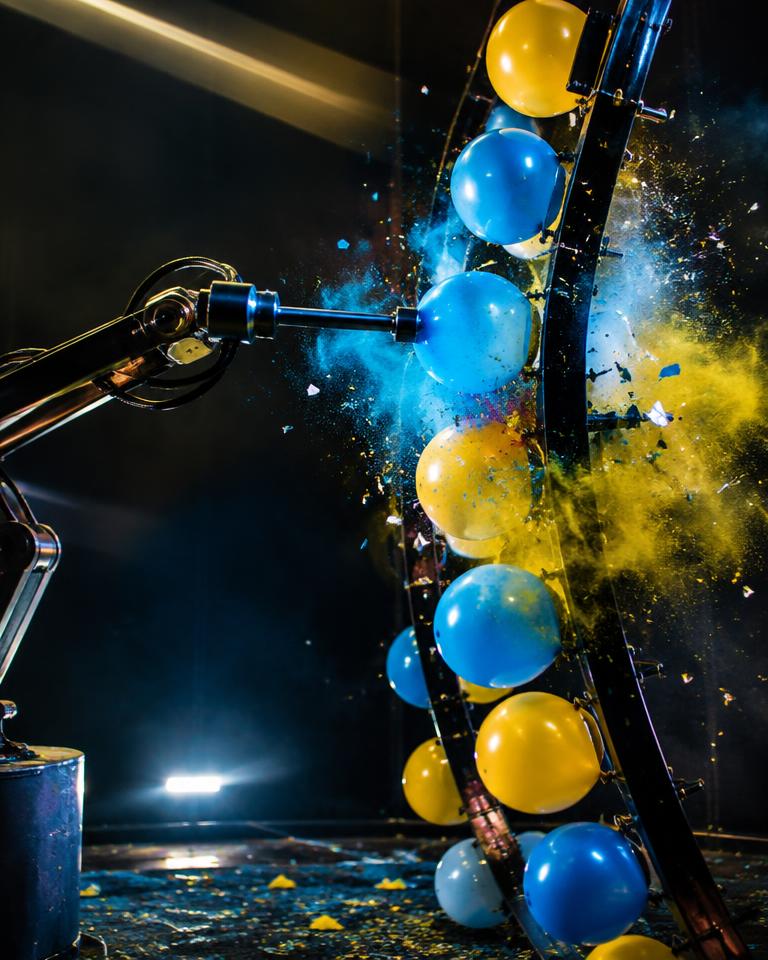
A 2.5m rotating vertical carousel driven between 5 and 25 RPM carries 12 heavy-duty balloons: 6 filled with fluorescent dyed water and 6 with metallic foil confetti. The robot intercepts them with an approved 15cm blunt-tip wand.
The arena
2.5m vertical circular carousel on an industrial servo drive (5–25 RPM) with 12 balloon mounts, strobe lighting and optical + acoustic pop sensors.
Format
May 18 · Semi-final
Fixed 8 RPM single-direction rotation: burst a minimum of 6 balloons within 60 seconds. Top 6 advance.
May 19 · Grand Final
Random variable speed with forward/reverse rotation alternation under strobe lighting.
Who wins
Pops + combo bonus
Highest score wins. Podium: 1st US$100,000 · 2nd US$10,000 · 3rd US$2,500.
Scoring, bonuses and penalties
What ends a run
Red flag — the run ends
Mechanical jamming of the wand into the rotating hub mechanism, or 4 consecutive missed strikes impacting the steel structural frame.
Teleoperation
+60s penalty for any active teleoperation assistance. Declare it before the run; hidden input is a rules violation.
What you need
08 // Crew, safety and updates
A maximum of five credentialed crew may be inside the live arena or staging bay during a heat, including a designated safety and emergency-stop lead. Each person above five adds +10 seconds to that run.
Every robot completes mass, battery, radio, emergency-stop and containment inspection before it is cleared for the grid.
Not only robotics companies: makers, students, independent builders and labs can form a group with their own hardware or a third-party robot. Software-only teams can run their stack on an accredited platform.
Taking part does not transfer ownership of your software, models, hardware or designs.
Official timing, scoring and steward records govern results; automated measurements remain subject to an auditable official review.
Written protests can be filed until the protest window closes on May 19; the steward tribunal publishes all rulings before the closing ceremony.
A-05 uses only de-energized, sealed dummy electrical fixtures. A-10 uses exactly 6 water and 6 confetti balloons — no airborne pigment powders.
The committee may revise dimensions, apparatus, schedules or procedures for safety, fairness or venue operations. Registered teams receive an official bulletin before any change takes effect.
Edition 1.9 of the Adaptive Standard. This public competition draft is under continuing technical and legal review; the committee will inform registered teams of any update. Prize terms remain subject to the official event rules.